FAQ’S
YOUR QUESTIONS ANSWERED
Frequently Asked Questions
What is an orangery?
-
An orangery is a stunning addition to any home and whilst their use may have changed over time, their distinguishing features never fail to deliver the wow factor.
A potted history of the orangery
Orangeries date back to the 17th century Renaissance gardens of Italy, a period when glass production was becoming increasingly popular.
Similar to a greenhouse in function but with styling more akin to a conservatory, the original purpose of a wooden orangery was to protect delicate citrus trees from harsh winter frosts. Occasionally, orangeries would also house a stove to provide extra warmth, particularly as imported citrus fruit such as pineapples became more widely available. However, orangeries would serve not just as a place for fruit propagation, but also as a symbol of wealth, due to the fact that glass was expensive and therefore an extravagance during this era.
The earliest examples of orangeries were simplistic constructions that could be dismantled during the summer months. It later became popular to incorporate the garden walls into the orangery design with a base of brick or stone and large panes of glass to let in light and warmth, making for a permanent structure.
As orangeries became more fashionable, their layout would be influenced by garden designers and architects alike, which paved the way for more aesthetically pleasing designs often with intricate iron detailing to hold the glass panes in place, as well as a more seamless connection being made between the house and orangery.
-
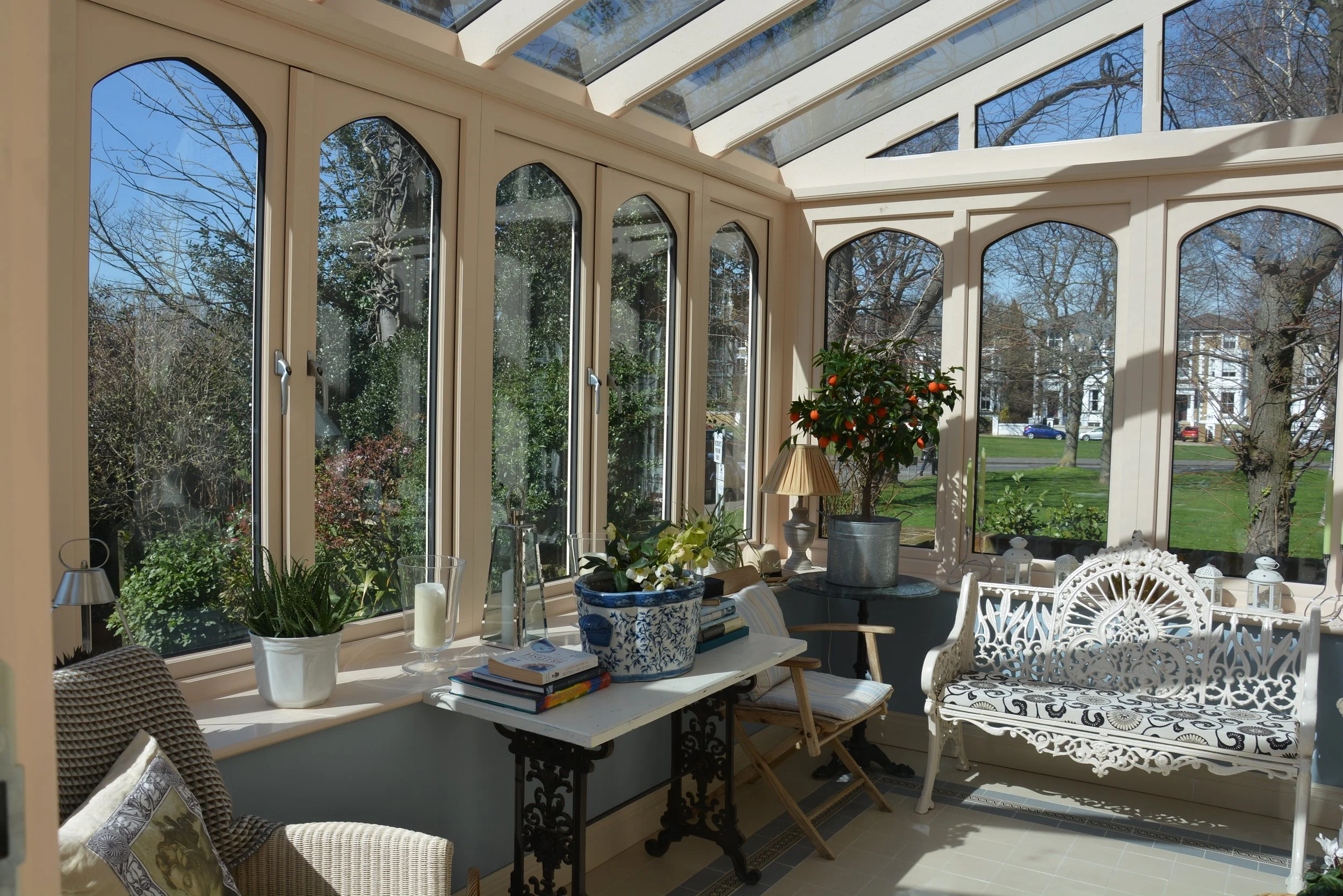
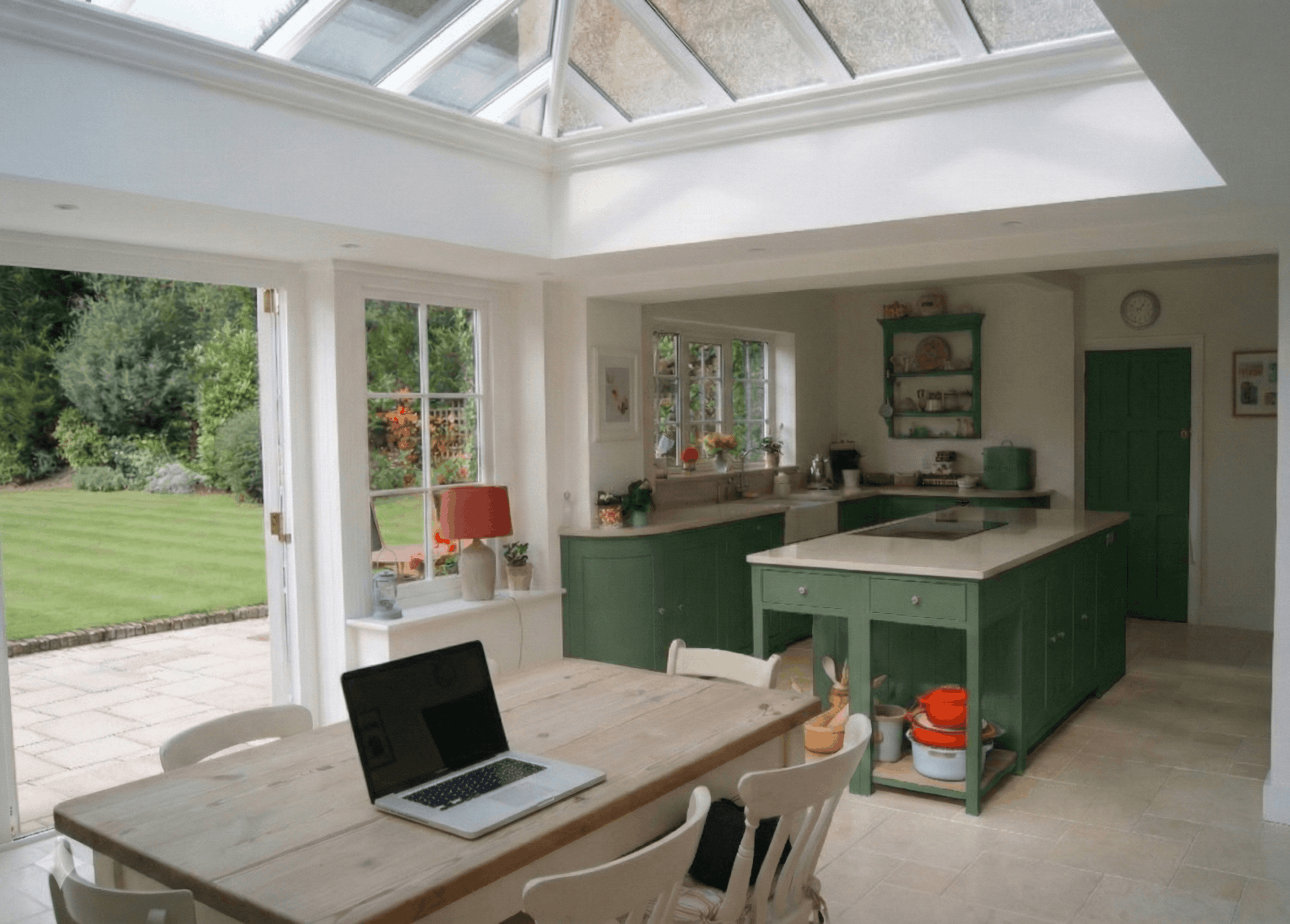
Today, have retained many of their traditional design features as well as a sense of luxury, but their function has evolved significantly to provide an adaptable living space used for relaxing, dining and entertaining.
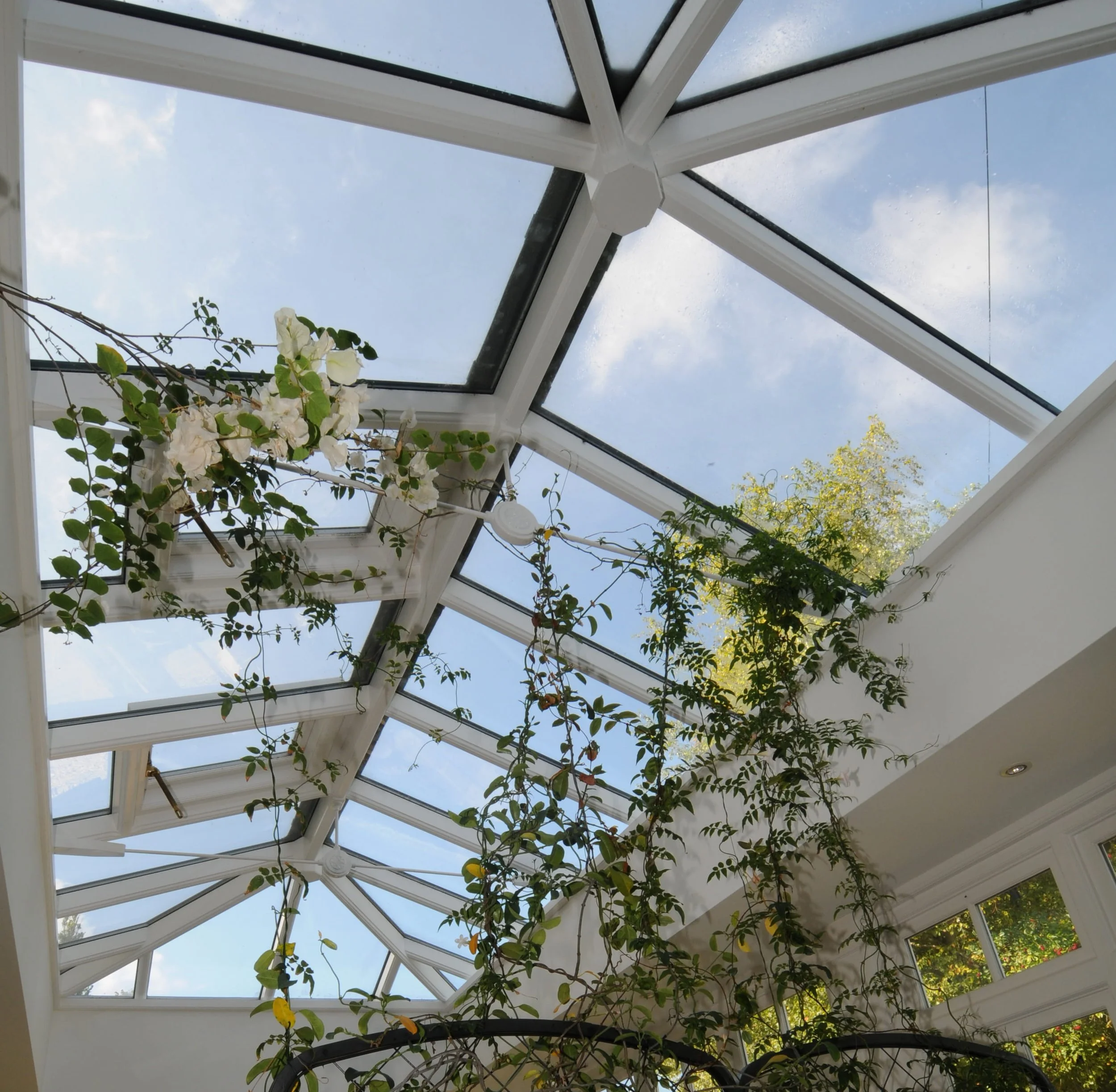
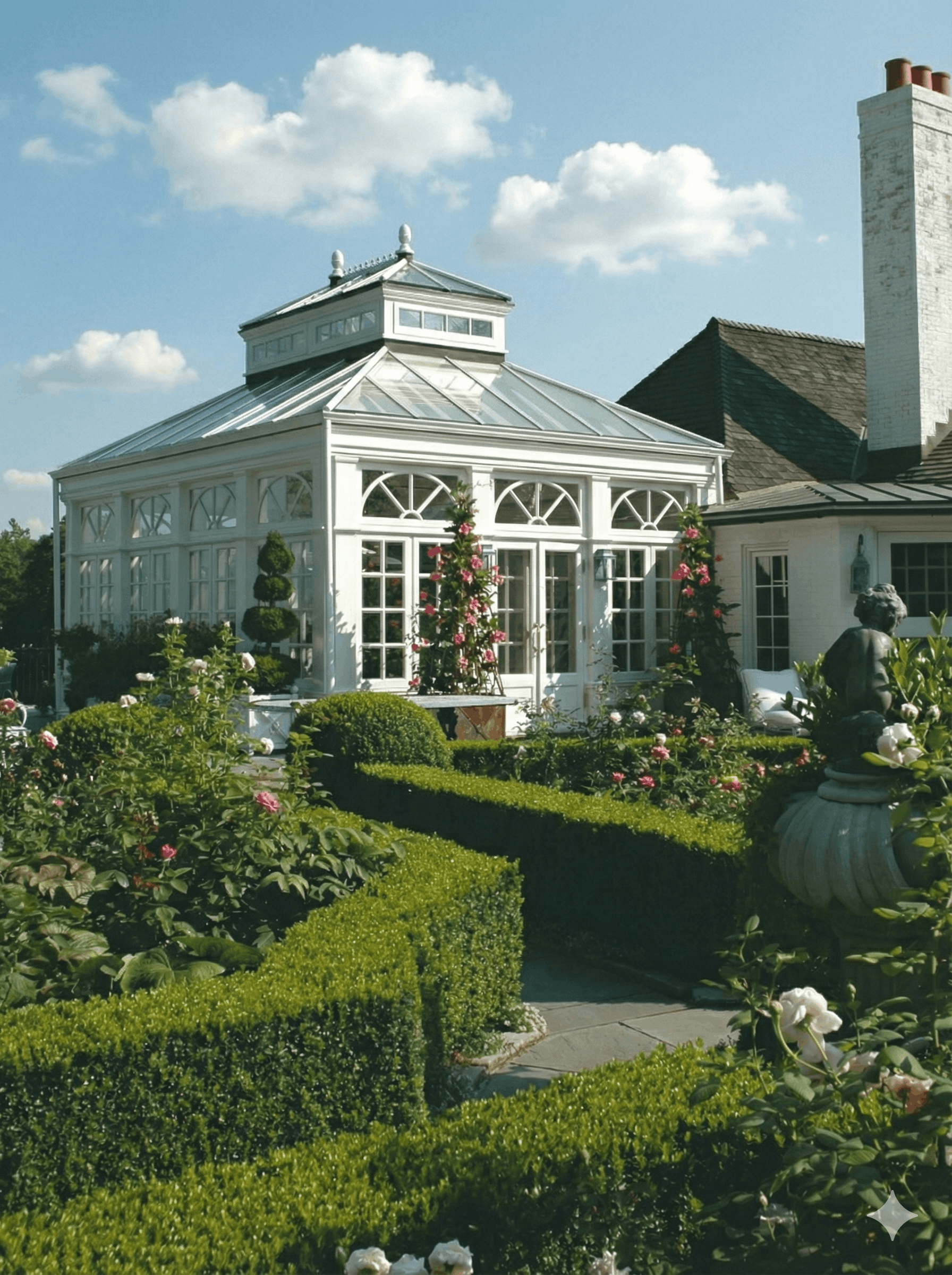
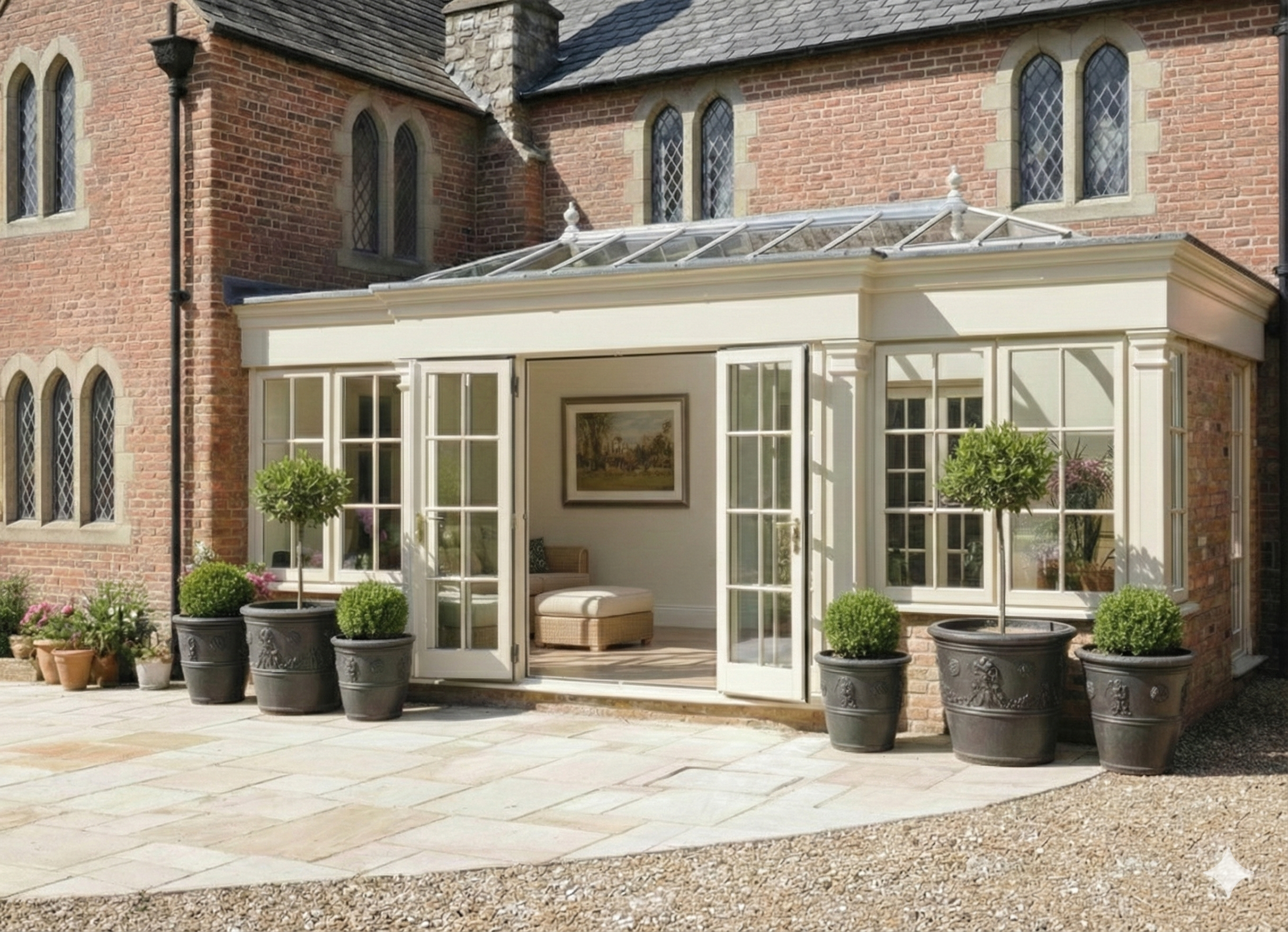
Modern orangeries generally comprise a solid base with supporting columns extending up to a flat roof which houses a glazed roof lantern: typically french doors (or bi-fold sliding doors) allow access to the surrounding garden or patio area. This arrangement floods the room with natural light and the roof lantern provides unparalleled sky views, creating an eye-catching centrepiece.
Typically a modern orangery is a bolder statement than a or because the architecture is created to contrast with the property in a display of grandeur and prestige.
Due to their positioning – usually at the rear of a property and extending beyond the boundary of the rest of the home – an orangery can be exposed to the elements. It is therefore of paramount importance that these types of glazed extensions are manufactured from reliable components that have been designed to .
An orangery is a stunning addition to any home and whilst their use may have changed over time, their distinguishing features never fail to deliver the wow factor that they once did over four centuries ago.
What is a Garden Room?
-
We’re frequently asked the question, "What is a garden room?"
generally-speaking, , and all constitute a ‘garden room extension’, but more specifically, we define a garden room extension as a semi-glazed building with a tiled roof as opposed to glass.
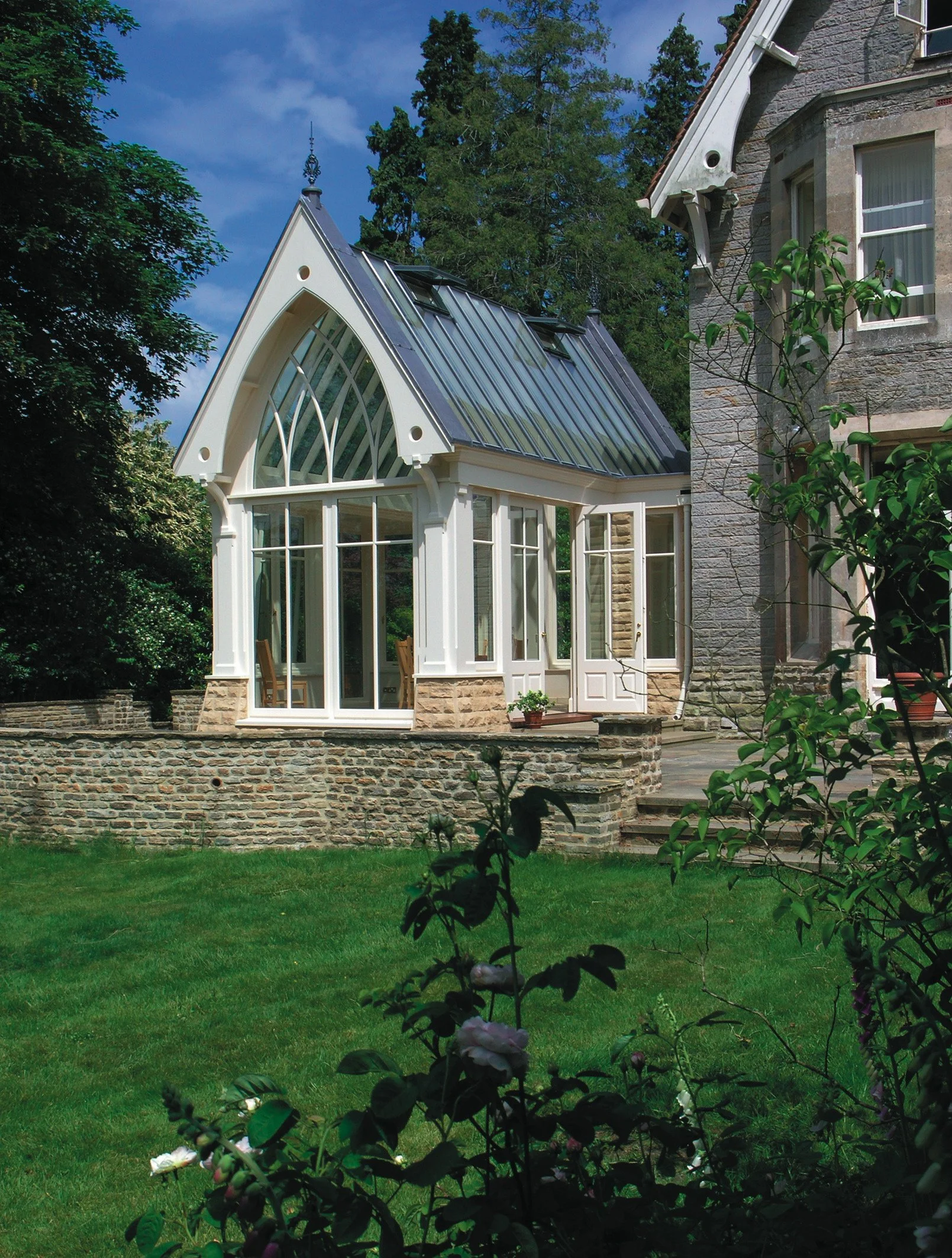
James Alexander timber garden rooms boast a high roofline with plenty of glazed aspects. Often the most stunning design feature is the glazing that spans into the apex. Large vertical panes of glass to the gables will flood the room with light, considerably increase the sense of space and emphasise the vaulted ceiling.
Large timber doors opening to the garden provide full height views, ventilation and open access, emphasising the close relationship between house and garden.
Building a garden room that is sympathetic to the architecture of your house and unique to you and your needs takes inspiration, dedication and understanding. Our timber garden rooms are designed to be living spaces in every sense, often becoming the heart of the home and adding value to both your property and, more importantly, your way of life.
Our experts are able to create custom garden room designs and help guide you through the decision-making process so that the result is a stylish and functional, bespoke garden room that perfectly fits your needs.
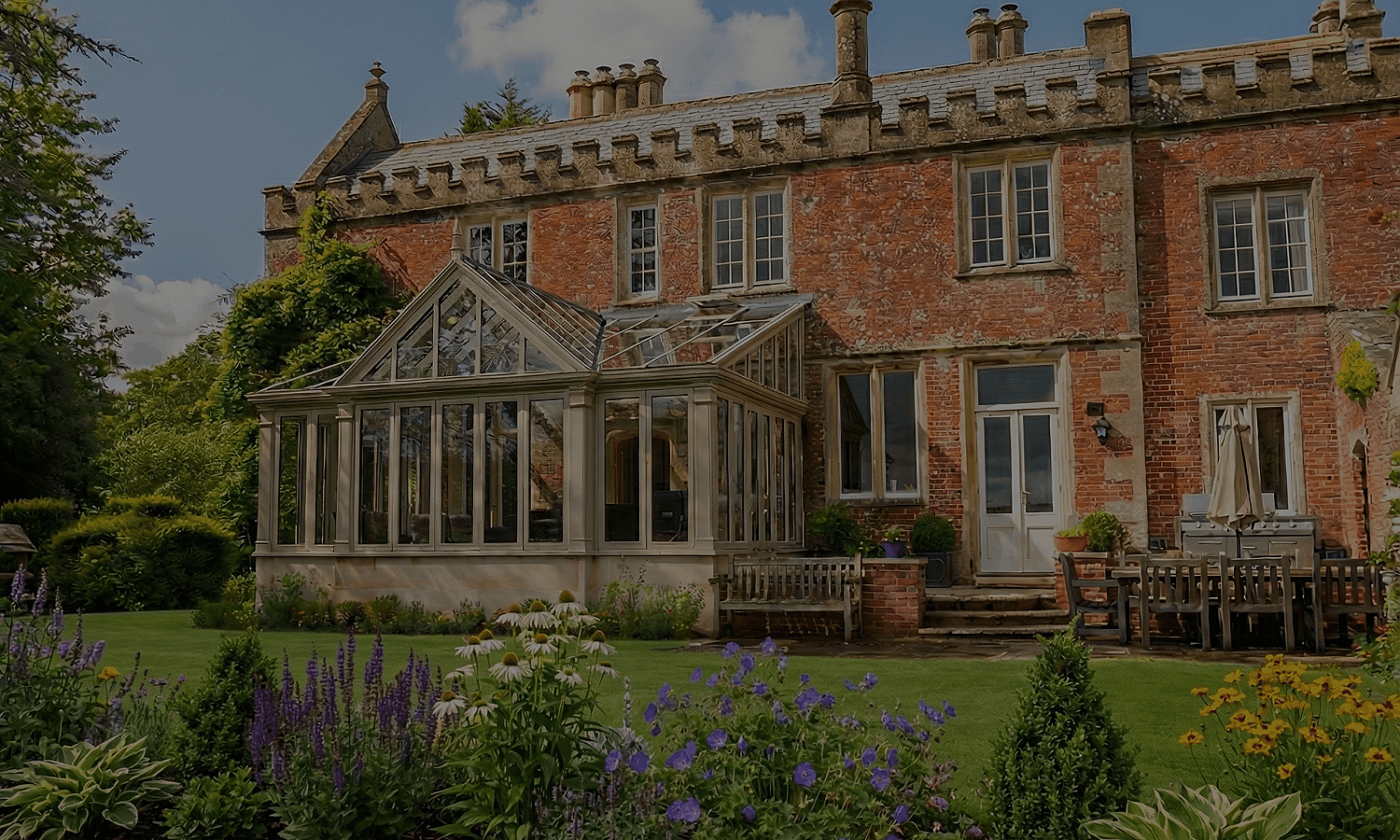
Whilst there is still a place, in the right home, for a traditional conservatory, a modern glazed timber extension is seldom used as an indoor garden. More often, it serves as a dining area, family room, a kitchen or a combination of these, and as a result, it needs to be comfortable and enjoyable every single day. The technologies we use when constructing your garden room ensure the building is never too hot or too cold, so you can use it comfortably in all seasons.
See our Garden Rooms
Planning & Building Regulations
-
Building Regulations will normally apply when creating an extension to your home, even where planning permission is not required.
Some ground-floor conservatories under 30m² can be exempt, provided they remain thermally separated from the house by external-quality walls, doors or windows and have an independent heating system with separate controls. Creating a new structural opening between the conservatory and the existing house will require Building Regulations approval.
For the open-plan garden rooms, orangeries and kitchen extensions we typically create, Building Regulations are therefore an important part of the design and construction process.
-
Not always. Many single-storey rear extensions can be built under permitted development rights, provided the property and proposed design meet the relevant requirements.
Whether your project qualifies depends on factors including its size, height and position, previous extensions to the property and whether additional planning restrictions apply. Listed buildings, Conservation Areas and other protected locations require particular consideration.
James Alexander Garden Rooms offers a full planning service to help establish the appropriate route for your project and guide it through the process where permission is required.
For a more detailed explanation, read our guide: Do You Need Planning Permission for an Orangery or Glazed Extension?
Design & Construction Specifications
-
We typically excavate a trench to 1,200mm deep and infill it with concrete to a minimum depth of 225mm.
Floors are thoroughly insulated with a 100mm layer of rigid polyurethane foam boards.
New walls are constructed with a 75mm cavity and insulated with 50mm rigid polyurethane foam boards to comply with building regulations.
We use a variety of building materials to seamlessly match your existing house facing, such as brick or reconstituted stone.
-
We only use premium quality Sapele Hardwood that is specifically selected for its strength, durability, and machining properties.
Our modern glazing options ensure heat loss can be reduced by 70% compared to old-fashioned single glazing.
We carefully balance the Solar Heat Gain Coefficient to prevent your garden room from heating up excessively in the summer.
Listed Buildings & Heritage Properties
-
Yes, the conservation of the historic environment is an important consideration, but living in a Listed property does not mean consent cannot be obtained.
The key to our success is designing extensions that complement, rather than overwhelm, the existing house.
We ensure the design is sympathetic to the house, appropriate in scale, and utilizes traditional materials like timber rather than PVCu.
The Process & Aftercare
-
While building work inevitably involves some inconvenience during the base preparation, our builders ensure reasonable access throughout.
Our professional fitting teams take pride in their work and will leave your site clean and tidy at the end of every working day.
-
Your relationship with us does not end on completion of your project; we offer a comprehensive aftercare service.
Upon satisfactory completion, we will provide you with a Guarantee and Aftercare pack detailing your rights.
In the unlikely event a fault develops, our expert team will respond promptly to propose a resolution.
Heating, Ventilation, & Comfort
-
We offer a range of heating options to suit your lifestyle, including electric under-floor heating (using wires or matting) and wet systems that extend from your existing central heating circuit. Air conditioning is also available if required.
For optimal ventilation, we provide powder-coated aluminium opening roof vents.
These can be operated manually using a worm gear system, or we can install automatic vents featuring thermostatic controls and rain sensors.
Security & Hardware
-
Absolutely. We fit high-security espagnolette catches with lockable handles, and a shoot bolt security locking system is standard on our side-hung casements.
Our window security has been rigorously tested to BS7950 standards, and our door security meets BS644.
To complement your interior design, our window and door furniture finishes are available in Brass, Polished Chrome, Stainless Steel, and Oil Rubbed Bronze.
Finishes & Maintenance
-
No, your garden room will be delivered fully finished.
The timber is treated with three factory-applied coats of micro-porous paint, ensuring a high-build, uniform finish that protects the wood.
You can choose from any RAL colour, with additional bespoke options available to perfectly match your home.
Glazing & Light Control
-
We carefully consider 'Visible Transmittance' (VT) when specifying your glass to ensure we balance heat reduction with optimal natural light.
If your garden room is south-facing, glass tints can be applied during production to help reduce solar gain and soften the light.
Integration & Architecture
-
Often, a new garden room can simply be accessed through an existing external door.
In situations where there is no existing opening, we can cut a new opening through your wall and install a suitable lintel to retain the load-bearing integrity of your property.
-
Every roof is designed to meet current British standards to easily handle roof wind and snow loading.
Flat roof areas and ridges are flawlessly finished with either a single-ply membrane or lead, depending on your preference and the design.
We also utilise a specialist double gasket system to ensure maximum weather proofing across all joinery.
Can’t find the answer to your question?
For anything specific or just to chat through everything with a friendly member of the team give us a call.
TIMBER FRAMES
Explore Our Range